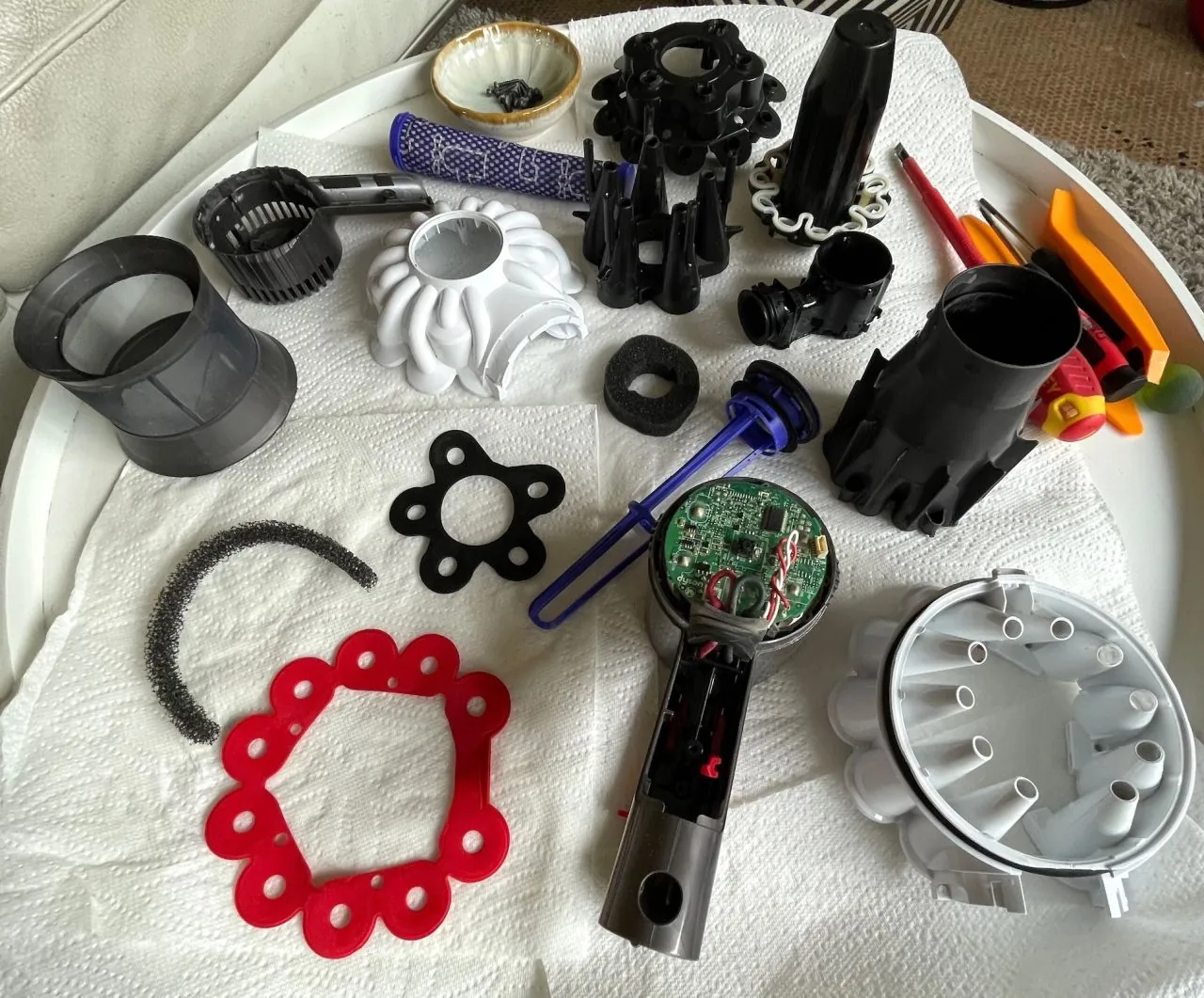
Ordered some tiny Torx screwdrivers and pry tools which means I was finally able to take the old Dyson V6 completely apart. It’s knackered, but once you clean everything out including the multiple filters, it usually comes back to life.
Was just reflecting on the manufacturing. There are a few tiny screws, but most of the device is held together with plastic mouldings. Tabs align with little grooves and hooks and the whole thing clicks together like (couldn’t think of what it clicks together like).
Seeing all the bits laying there it’s a bit fascinating, I mean do the designers do all this in CAD? How do they calculate the tolerances? Loose enough to allow damage-free disassembly, tight enough to guarantee air seals.
Another thing, working on #Dyson projects I visited their call centre (looked like a fun place to work). Piles of plastic parts everywhere. So as well as the physical build there is also the service that allows humans to discuss all of this, do troubleshooting etc.
Oh and another thing, Dysons are handed down between generations like heirlooms. This means you need persistence of knowledge. You can’t just say ‘that’s too old’. They even had a little lounge off the side of the factory where people could bring in their old kit and chat with experts.
Anyways, time to walk the dog…
AFFILIATE LINKS
properbroadband.co.uk