 dug
dug 
I’m a life-long, hard-left-leaning, liberal…
So I asked our invisible friend to flesh out what’s going on with polarised politics and in particular, where do I need to look or listen to treat my right-wing fellow humans as partners in growing our society? I asked is there such a thing as right wing thought? Is there an intellectual tradition I should be learning about?
Here’s what it wrote:
1. Yes, the intellectual tradition on the right has genuine depth
Across the 18th–20th centuries, conservative thought was shaped by serious philosophers concerned with order, authority, moral formation, institutions, social obligation, and the tension between liberty and tradition. A few anchors:
- Edmund Burke – scepticism toward abstract ideology; respect for inherited institutions; slow, organic change.
- Michael Oakeshott – emphasis on practical knowledge, tradition as accumulated wisdom.
- Russell Kirk – moral imagination, continuity, stewardship, the “permanent things.”
- Roger Scruton – love of home (oikophilia), the sacred, beauty, and the social goods embedded in institutions.
- T.S. Eliot (cultural conservatism) – preservation of a fragile, shared culture against nihilism.
- Disraeli / One Nation – paternalistic duty, social cohesion, obligation to the vulnerable.
It’s a tradition that values seriousness, restraint, self-critique, and cultural inheritance. Whether one agrees with it or not, it is unmistakably intellectual and is embedded in centuries of debate.
2. Today’s online right is often something else entirely
When people talk about the online right, they’re usually pointing to a cluster of tendencies that emerge from online platforms rather than political philosophy:
a) Performative antagonism
Social media rewards outrage, mockery, and tribal signalling. This amplifies:
- “owning the libs” dynamics
- deliberate provocation and culture-war flare-ups
- algorithm-driven polarisation
This is political communication as performance, not as thought.
b) Shallow narrative frames
Instead of engaging with questions of authority, virtue, institutions or social order, the online right often collapses problems into:
- conspiratorial explanations
- simplistic decline narratives (“everything is collapsing because of X”)
- identity-based zero-sum frames
- meme politics
This is easy to consume, but it lacks the conceptual architecture of older conservative theory.
c) Anti-institutionalism
Classical conservatism prized institutions (church, courts, universities, civil service). Much of today’s online right sees institutions as inherently corrupt and treats distrust as a virtue. That’s a philosophical inversion of traditional conservatism.
d) Accelerationism and nihilism
Where earlier conservatives sought to slow change and preserve continuity, some online communities embrace:
- chaos as a political weapon
- “burn it all down” rhetoric
- irony-laced nihilism
This is closer to a countercultural revolt than to Burke.
3. Why the divergence?
Several forces might explain this gap:
Algorithmic political economy
Platforms reward emotional intensity over nuance. Provocation is much more viral than Burkean caution.
Collapse of shared institutions
Declining trust in universities, media, churches, and legacy parties may be creating a vacuum filled by alternative influencers whose legitimacy comes from attention, not scholarship.
Generational disruption
Younger online communities might be experiencing politics as a cultural identity rather than a philosophical tradition. Speed beats depth; memes beat treatises.
Commercial incentives
Many online figures monetise outrage (ads, subscriptions, attention). This shapes the content away from serious inquiry and toward constant escalation.
4. What gets lost?
When conservatism becomes primarily an online aesthetic, several pieces fall away:
- historical memory
- the discipline of reading and debate
- the idea of duty (to the vulnerable, to institutions, to the dead and the unborn)
- the moral language of virtue, prudence, and restraint
- a sense of proportion and tragedy
These losses may create a gap between a deep intellectual inheritance and a shallow, reactive online style.
5. This can be said of the online left too — but in different ways
Just for completeness: shallow online politics isn’t unique to the right.
But the critique hits the right particularly sharply because conservatism defined itself historically through its intellectual seriousness, its respect for tradition, and its mistrust of populist passions. When the movement becomes dominated by rapid-fire culture-war “content,” it contradicts its own philosophical DNA in a way that’s especially stark.
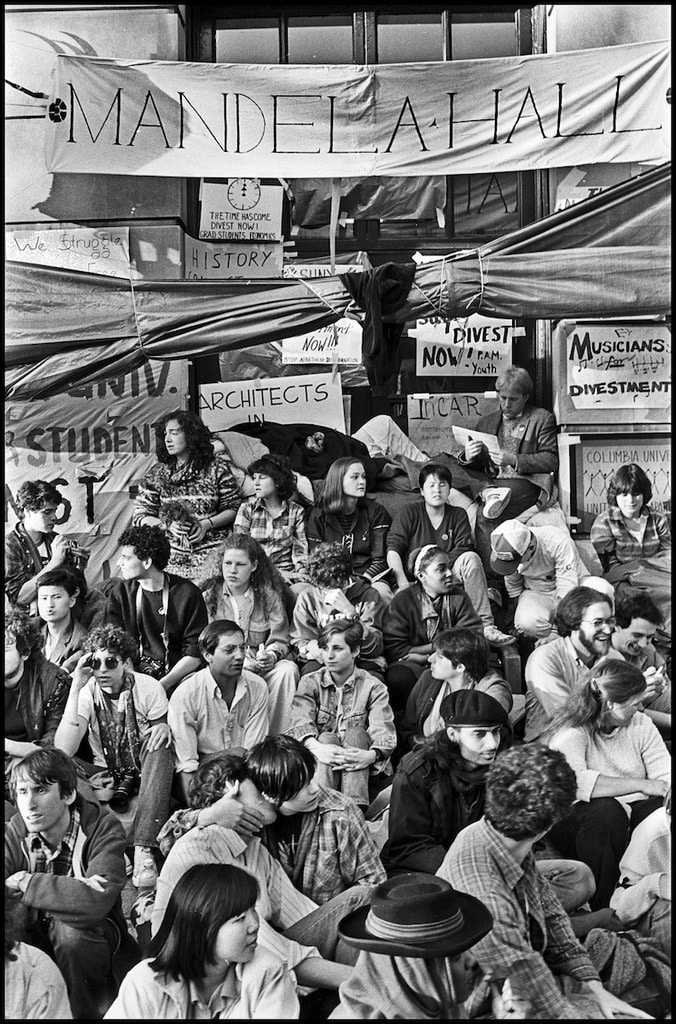 Columbia Unversity, NYC, April 1985